The Future of Entertainment: Which Gadgets Will Revolutionize How We Play and Watch?

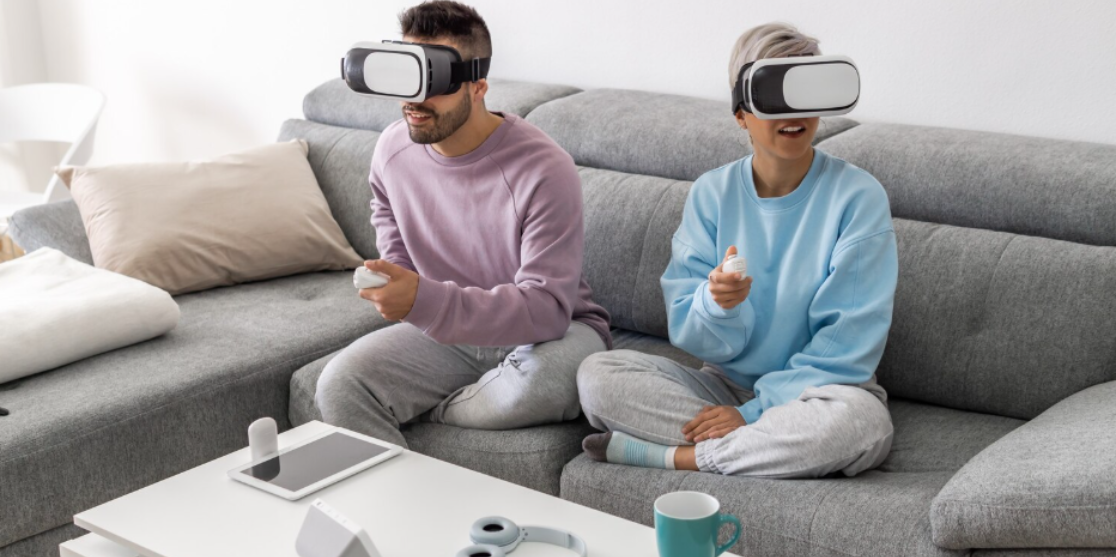
The entertainment paradigm is about to undergo a technological disruption that will transform how we consume media, play games, and interact with content.
The entertainment paradigm is about to undergo a technological disruption that will transform how we consume media, play games, and interact with content. With the intelligence of the screens, the richness of the experience, and the perfection of the personal touch, a new generation of gadgets is emerging to cater to us, the latest entertainment consumers. The new devices will be special because they will represent better stages of technology development and provide new ways for users to experience different media, such as stories, music, and interaction with the content. From holographic displays capable of inserting images into our physical space to neural interfaces that can be life-changing for us, such as capturing our intentions and reflecting them on media, the future of entertainment technology will blur the boundaries between the digital and physical worlds. This paper aims to explore the gadgets and setups that will have a significant presence in the future entertainment sector and to provide a perspective on both their transformative possibilities and the problems they are intended to address to penetrate the market.
Hyper-Immersive Display Technologies
The enormity of the things seen on screens will leave current technologies far behind, particularly when new display technologies emerge. MicroLED screens, with their self-luminous property, are the next-generation large displays that are not only free of burn-in or other aging issues but can also be easily assembled into the required masterpieces. On the other hand, the light field displays will be a game-changer that can create a real holographic view for anyone, from every corner and seat, without the need for typical bulky 3D glasses, thus making such content naturally a part of physical space. These displays exploit state-of-the-art optics to manipulate the direction and wavelength of the light streams, thereby reconstructing objects in a way that makes them appear so plausible to the human brain that the latter perceives them as if they have depth. The objects are not made up of a stereoscopic illusion. These types of displays will also offer new horizons for gaming and filmmaking, as virtual objects will be able to interact with their environment, giving the impression of coexisting in the real world. The only issue is that reducing their size and the cost of such large devices will be necessary while creating the right content. As these technologies mature, they may eventually replace conventional screens entirely, turning any surface into a potential display and transforming ordinary rooms into portals to other worlds.
Haptic Feedback Systems
Entertainment is poised to go beyond sounds and images, where advanced haptic technologies will provide fully sophisticated and authentic touch sensations. Next-level force feedback vests and gloves will simulate mild winds and substantial impacts with no visible difference. This will be possible using arrays of precisely controlled actuators and air compression systems. The new attire can do more than vibrations. It can impart delicate textures, temperatures, and the sensation of virtual objects with weight and resistance. Coupled with VR, these haptic systems would give a user more than just the experience of a virtual storm. They may also feel the raindrops on their bodies. Users can have a realistic feeling of the impact of virtual weapons in their hands. The more obvious one is that an ultrasonic haptic system can transmit touch in the air, such as when a user wants to feel invisible buttons or virtual objects. However, they are not dressed in any special gear. Game playing will become more realistic, emotional engagement with movies will be attained, and people's communication in the virtual world will happen as naturally as in the real world. These are some of the promises these technologies carry.
Brain-Computer Interfaces for Media Control
Recent developments in the field of neural interfaces indicate a potential future where we can directly control entertainment systems using our minds, thus bypassing the traditional input devices altogether. For instance, non-invasive headbands that leverage the power of advanced EEG sensors can now detect the basic mental commands and emotional states of a person with a constantly increasing accuracy. The following versions allow viewers to stop the movie simply by thinking of it, adjusting the volume via mental focus, and navigating game menus with expressions of the imaginary movements of their hands. More advanced models would be able to create virtual worlds of such depth that thoughts would control the character, and the story and line influenced by them would be subconscious. While the present technology is not yet perfect and is far from what is seen in science fiction, it is not dull and hidebound. The fast growth in sensor sensitivity and machine learning for the translation of neural patterns suggests that thought-controlled entertainment is not as remote as it may seem to most people. The most probable immediate uses of the new technology would initially be to help individuals with disabilities, and only after that would it be viable to be applied to the consumer market on a large scale. Indeed, the long-term consequences of these developments could lead to a situation where our interactions with all media would radically change.
Social Entertainment Hubs
The upcoming entertainment devices are designed to unite people through shared experiences, enabling them to communicate at a distance and emphasizing intimacy. Virtual presence will be the main feature of future telepresence systems that will allow users to watch movies, play games, and keep in touch with their loved ones as seamlessly as if they were in the same room via 3D holographic projections. Further to the above, multi-user augmented reality glasses would let groups collaborate with virtual objects as they would in a physical space, and, in turn, this would mean that board games, storytelling, and live event viewing will undergo a complete transformation because of the new digital-physical hybrid experience. Homes-to-be will be furnished with intelligent surfaces that serve as collaborative entertainment spaces for multiple users. Hence, the latter may use natural gestures to manipulate the content. These social technologies are designed to keep at bay the expected detachment that can occur when a person is engaged in digital entertainment and to, at the same time, be in a position to nourish real-life relationships. The big problem is to create systems that experience presence as an essential element rather than as a technology-mediated feature; this means technological progress is necessary because there is progress to win latency, image resolution, and spatial audio quality so that the perception of genuine kinship of remote participants is not altered by the passage of the time.
Environmental Entertainment Systems
In the future, entertainment spaces can be any rooms or buildings that are directly part of the experience. Bright walls equipped with millions of micro speakers will make the sound seem to come from wherever listeners are, eliminating the need for sweet spots and allowing audio to be heard from specific points in space. Programmed matter surfaces could effortlessly transform into the needed chairs or other environmental elements suitable for different contents. Air-conditioning systems may connect the room's temperature, airflow, and even scent with the on-screen actions so that a desert scene will make the place hot and dry while the ocean scene brings freshness. Such ambient technologies, unobtrusively fusing into the environment of the place, will raise the immersion level instantly by not unearthing the awareness, or very actively, these entertainments could feel. They would create multisensory environments that are in complete synergy and harmony. Today, these are only parts and models. Still, their merging will undoubtedly result in houses that are transformable to offer any entertainment their residents want, with minimum energy in the process.
Conclusion
The types of equipment used in the future for entertainment will be directly responsible for reshaping how we experience stories, games, and media. In a most literal sense, there will be no tremendous obstacles standing between the content and the viewer. Turning from ordinary viewers to co-creators and virtually the directors of the friendly worlds around us, we will be involved in the whole process, from telling how things should happen to our responses and how we feel about them. All this technological revolution is breaking the traditional bounds of art, culture, and entertainment by introducing deeper and broader concepts that are challenging for a beginner like us to imagine. The future here is not limited to only new technical capabilities. Still, it also represents entirely new dimensions of art and a whole new avenue for a society to interact with itself. The only thing to go viral in the world of tomorrow, whether during a global pandemic or in an understated community initiative, will be products that are not only easy to use and understand but are suitable for engaging all five senses of a human being. They should not lose grip of their range's location and visionary capabilities but rather extend the touch and feel of the user's creative story, thus maintaining familiarity as the best-guiding light for them in the market. Creatives are, therefore, presented with the challenge and the opportunity to deliver message-laden pieces that align with the new set of tools and are centered on emotion and artistic truth. Having promising technological advancements on the one side and potential customers on the other, the evolution of the entertainment industry gives stakeholders the upper hand in formulating an ecosystem that looks like a multifaceted tech world and, at the same time, fits into the semantics of what if "watching" got another form or the term "gaming" went through a transformation. The competition among the next generation's innovative gadgets will be resolved in favor of those products that solve human problems and not just display technical prowess. Our living rooms will probably be our magic wands to the digital playgrounds, automated devices becoming the companions of our lives, and entertainment not just a product but an environment. This transition has long started, leaving the only inevitable that sport and watch be acted in an entirely different manner from then on.