The Future Is Here: Which Emerging Technologies Deserve Your Attention?

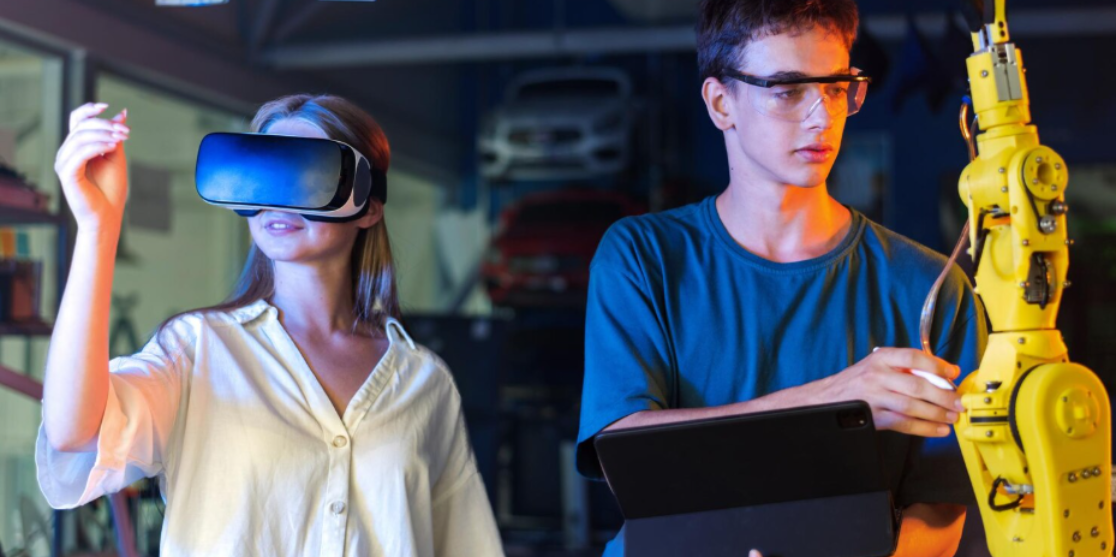
The technological landscape is going ahead at a rapid rate, bringing in breakthroughs from everywhere.
The technological landscape is going ahead at a rapid rate, bringing in breakthroughs from everywhere. Stepping into the Fourth Industrial Revolution, some revolutionary technologies will change how we live, work, and relate to the world around us. It's not just improvement; it's a complete transformation. Many new businesses will be created, while the old ones will be damaged. The next ten years will experience the growth of technological developments that were formerly available just in science fiction, such as artificial intelligence, which is continuously evolving, and quantum computing, which is up to solving problems that were initially unmanageable. All current and future generations of the human race must familiarize themselves with these new technologies directly, not just to people with a tech background, since the digital world will continue to grow extensively. This study can be the answer to finding out the most essential technological paradigms of the future, defining their probability of existence, and showing how and why they are relevant to your daily and working life.
Artificial Intelligence and Machine Learning Evolution
AI and Machine Learning are two technologies with the highest potential and constantly changing. The increasing pace of technological revolvements creates a wide range of benefits and affects several aspects that need to be reviewed to meet the new world. Moving beyond the current generation of computer technology might enable quantum computers to solve problems in new ways. Do not neglect these trends; they will only grow and become the norm. No longer a question of choice but a necessity, these are fundamental tools for enhancing the learning process. Why don't we reinvent the whole idea of having libraries? We can replace them with more virtual address points for quest engines. Artificial intelligence can now do more than recognize patterns; it can learn, adapt, and even show some aspects of creativity. The next generation of AI will come with more sophisticated natural language processing capable of understanding the context and nuance in human communicative behavior. We are now at the dawn of AI models that can understand and explain their decision-making process - a revolutionary step towards solving the "black box" problem and making AI solutions trustworthy. The innovation in AI technology leads to generative AI models that can produce original content in various forms - from art, music, and computer code to product designs. These novel AI applications will revolutionize different industries. For instance, in healthcare, AI can be a source of assistance in identifying and planning the treatment of a patient. In education, personalized learning experiences can be designed for every student. However, the acceleration of these innovations is accompanied by a set of ethical dilemmas that our society will need to solve: job displacement, algorithmic bias, and the boundaries of machine decision-making.
Quantum Computing Breakthroughs
Quantum computing is a paradigm shift from traditional computing, using quantum mechanical principles to execute a computation. Though still in its early stage, quantum computing has gone a long way from purely theoretical research to working prototypes that exhibit "quantum advantage" by solving specific problems that would otherwise be unsolvable in reasonable timescales by classical computers. The range of potential uses is huge: simulating complex molecular interactions for drug discovery, optimizing logistics systems, and decoding unbreakable encryption protocols currently used in digital infrastructure. The world's largest technology firms and major governments have committed billions of dollars to quantum research, reasoning that the first nation or company to achieve full-scale error-corrected quantum computing would receive considerable strategic benefits. The quantum era will unlock incredible opportunities for both businesses and individuals. Still, at the same time, especially in the area of security, they will also face new challenges, which will entail revisiting the approach to data protection
Biotechnology and Genetic Engineering Advances
The marriage of biology and advanced technologies allows us to create a healthier and more prosperous future. Gene-editing technologies, in particular CRISPR, are now much more precise and widely accessible, providing us with the potential to not only cure genetic illnesses but to create people with improved abilities. mRNA vaccines, which have been successfully used against the pandemic, are now being developed to solve other medical problems, such as cancer. Also, the development of lab-grown organs and tissues not only addresses the shortage of transplants but is also one of the most sought-after therapies for immobility and paralysis in patients. The most contentious issue related to biotechnology growth is the possibility of creating living organisms that could be re-designed as computers augmenting the processing capability; thus, the same cells might function as medicine producers, such as clean-up agents or fabricators of outputs. The technological status is a clear indication that society has challenges concerning these biotech achievements, which lead to deep ethical discussions regarding the enhancement of humans, genetic privacy, and the relationship with nature, the same that society must wrestle with as the technologies become more established.
Energy Storage and Generation Innovations
The global transition to clean energy is the primary driver of the dazzling array of inventions in power generation, distribution, and storage. With the development of next-generation battery technologies, we can now expect better energy density, faster charging, and, not to mention, increased safety compared to the current lithium-ion technology. Thanks to solid-state batteries, the transport sector will benefit the most since they will increase the range of electric vehicles and reduce the charging time to a few minutes. The search for nuclear fusion is now reaching the slow but steady road and can even live to tell the story; that's because several experimental reactors have finally achieved the needed energy gain, which is net. Equally important, renewable energy sources are moving closer to the goal of efficiency and cost-effectiveness; thereby, perovskite solar cells are soon to become high-efficiency with low production costs. Integrating innovative grid systems and using slightly less centralized energy are stepping-stepping into the future of tree tree decline networks. These advances in energy are not only environmentally friendly, but they are also profoundly influential in other fields, such as geopolitics, as they can significantly decrease countries' dependence on oil-producing areas. In addition, it could create an economy that runs on abundant, clean energy.
Space Technology and Commercialization
We are moving into a new space travel and commerce chapter powered by advancing technology and private-sector investment. The introduction of reusable rocket technology allows access to space at lower costs than before. The innovation of miniaturized satellite utility has set forth constellations of small and affordable satellites for global network coverage and even business observation. It's now possible to produce materials in space due to microgravity, which is free from the restrictions of Earth to create them. More importantly, technologies enabling the establishment of human habitats on the moon and the subsequent colonization of Mars are progressing from theory to reality. This development in space can lead to a broad range of opportunities, such as space tourism and asteroid mining, in addition to the aspects of governance, environmental impact, and weaponizing of space, which will be important issues. The transformation of the commercial space industry could be the most critical economic event of the new century, leading to the creation of totally new sectors and the reinvention of existing ones.
Conclusion
All of the coming technologies can potentially change our world in profound ways. Quantum computing will solve many of the problems that we have now, but it also might mean that we have to start from scratch with our digital security. However, this is simultaneously a moment when human beings can reconsider and define anew the concepts of work and creativity. In a parallel way, the biotechnological future may bring about enhancements and extend human life, but it is not entirely straightforward on the ethical side. Today, significant energy changes are closer to making the long-cherished dream of a fossil-free future for our planet a reality. We are now in a period where new space technologies are unfolding as one of the new frontiers for human expansion and economic activity.
It is unique that the integration and upgradation of these tools characterize this era of technology. The agreement between advancements such as AI oncology, quantum computing, an AI enhancer, space technologies, and advanced materials produced via nanotechnology. This combination of the said sectors creates an explosion of ideas that mankind has never experienced—a development that humans cannot keep pace with and even think of.
Individuals and companies are obligated to themselves: they must follow the info, analyze the eventual effects, and spark their innovativeness so that they not only survive in such a fast-changing technological environment but also thrive. The technologies that the people of the coming decade will take today will be in the final stages of their development, and by then, the societal impact will be vast. Those who recognize this fact earlier will be the first to benefit from the technologies and face the challenges of using them. The future is not a far-off event; it is rather a current phenomenon being developed in research centers, small businesses, and innovation centers worldwide. By mastering these upcoming technologies today, you can start to ride the wave of opportunities they will bring tomorrow, and you can also become an active participant in the creation of their future form and the part they will play in our society. It's not a matter of whether these technologies will shake the world - indeed, they will - but how we will choose to employ them to shape the future we crave.