5 Simple Ways to Use Dumbbells at Home to Stay Fit

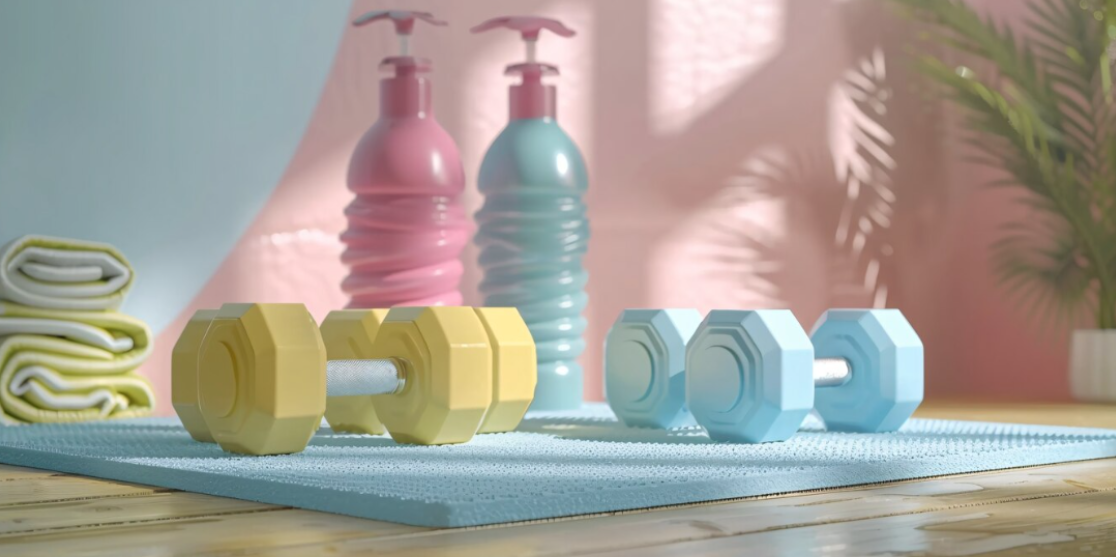
You don’t need a gym membership, fancy machines, or even hours of spare time to stay fit.
You don’t need a gym membership, fancy machines, or even hours of spare time to stay fit. Sometimes, all it takes is a humble set of dumbbells and a bit of floor space. Whether you're new to strength training or simply looking to shake up your home fitness routine, dumbbells are one of the most versatile, accessible tools for improving strength, endurance, and overall health.
In this blog, we’ll explore five simple yet effective ways to use dumbbells at home, helping you stay fit, toned, and energised without stepping outside your front door. Each move can be tailored to your fitness level and incorporated into a routine that works for your lifestyle.
1. Full-Body Conditioning with Dumbbell Squats
- Target areas: Legs, glutes, core, and upper body (if combined with a press)
Dumbbell squats are a brilliant full-body exercise. Holding a dumbbell in each hand at shoulder height or down by your sides adds resistance to the traditional squat, engaging more muscles and increasing calorie burn.
How to do it:
- Stand with feet shoulder-width apart.
- Hold a dumbbell in each hand by your sides (or at shoulder height for added challenge).
- Lower your body into a squat, keeping your back straight and knees behind your toes.
- Push through your heels to return to standing.
For an added twist, press the dumbbells overhead as you rise, transforming it into a squat press and bringing your shoulders and arms into the mix.
Why it works:
This mve mimics natural movements like sitting and standing while building strength in your lower body and core. It also raises your heart rate, offering cardiovascular benefits alongside muscular endurance.
2. Dumbbell Rows for a Stronger Back and Arms
- Target areas: Back, biceps, shoulders, and core
A strong back improves posture and reduces the risk of injury. Dumbbell rows are excellent for working those hard-to-reach back muscles and toning your arms at the same time.
How to do it:
- Place your right knee and hand on a bench or sturdy surface.
- Hold a dumbbell in your left hand, arm extended straight down.
- Pull the dumbbell towards your waist, keeping your elbow close to your body.
- Lower slowly and repeat. Switch sides after a set.
Pro tip:
Engage your core throughout the movement to keep your spine neutral and stable.
Why it works:
Rows target the upper and mid-back muscles, often neglected in home workouts. They’re also an effective way to improve grip strength and arm tone with minimal equipment.
3. Dumbbell Chest Press (Floor or Bench)
- Target areas: Chest, triceps, shoulders
The chest press is a classic strength-building move that you can easily do at home with a pair of dumbbells. If you don’t have a bench, the floor works just fine.
How to do it:
- Lie on a flat surface with a dumbbell in each hand, elbows bent at a 90-degree angle.
- Press the dumbbells upwards until your arms are extended.
- Slowly lower back to the starting position.
Floor vs Bench:
- On the floor: Safer for beginners, limits range of motion slightly.
- On a bench: Allows deeper stretch and fuller movement for advanced users.
Why it works:
This movement strengthens your chest, shoulders, and triceps. It’s also a good way to counterbalance all the pulling movements (like rows) and build upper body symmetry.
4. Overhead Dumbbell Press for Shoulder Strength
- Target areas: Shoulders, triceps, upper back
Strong shoulders not only look good, they also help with daily tasks like lifting groceries, carrying bags, or reaching high shelves. The overhead press is straightforward but incredibly effective.
How to do it:
- Stand with your feet shoulder-width apart.
- Hold a dumbbell in each hand at shoulder height, palms facing forward.
- Press the weights overhead until your arms are fully extended.
- Lower slowly back to the start.
Seated variation:
Perform the same movement while seated to reduce strain on your lower back and isolate your shoulder muscles more.
Why it works:
This move improves shoulder mobility, builds definition, and strengthens the stabilising muscles in your upper back. Pair it with a lower-body movement, like squats, for a dynamic, compound exercise.
5. Dumbbell Deadlifts for Total-Body Strength
- Target areas: Hamstrings, glutes, back, core
Don’t let the term “deadlift” intimidate you—this is a controlled, safe move when performed with proper form and light weights. It’s excellent for building lower-body strength and improving posture.
How to do it:
- Stand tall with a dumbbell in each hand, palms facing your body.
- Hinge at the hips and lower the dumbbells down the front of your legs.
- Keep your back flat and knees slightly bent.
- Once you feel a stretch in your hamstrings, return to standing by driving through your heels.
Form tip:
Keep your chest lifted and shoulders pulled back to avoid rounding your spine.
Why it works:
Deadlifts recruit several large muscle groups at once. They’re great for strengthening the posterior chain, key for athletic performance and injury prevention.
Putting It All Together: A Sample 20-Minute Routine
You don’t need hours to see results. Here's a simple circuit using the five exercises above. Perform each movement for 45 seconds, followed by 15 seconds of rest, and repeat the circuit 3–4 times.
- Dumbbell Squats (or Squat Press)
- Dumbbell Rows (left and right)
- Dumbbell Chest Press
- Overhead Dumbbell Press
- Dumbbell Deadlifts
Cool-down:
Finish with a 3–5 minute stretch, focusing on your shoulders, hamstrings, and back.
Tips for Success with Dumbbell Workouts at Home
- Start light: Focus on proper form before increasing weight.
- Progress gradually: Increase reps, sets, or dumbbell weight as you get stronger.
- Keep consistent: Aim for 2–4 sessions per week, depending on your goals.
- Combine with cardio: Short bursts of skipping, jogging in place, or jumping jacks can enhance fat loss and cardiovascular fitness.
- Track your progress: Use a journal or fitness app to monitor improvements in strength, form, and endurance.
Dumbbells might be small, but their impact on your fitness is anything but. They offer the perfect balance between strength-building and convenience, especially when working out from home. With just a few simple movements, you can create a well-rounded workout routine that targets every major muscle group—no need for bulky machines or crowded gyms.
The best part? These exercises can be modified for every level, from absolute beginners to seasoned fitness enthusiasts. Whether your goal is to build strength, improve posture, tone muscles, or simply stay active, dumbbells are the perfect partner in your home fitness journey.
So, dust off those weights, clear a bit of space, and get moving. Your body—and mind—will thank you.